Creaking. Groaning. Glittering light.
Native peoples regarded this place with a mixture of reverence and unease.
Legends accumulated around it.
Even today, under a clear night sky, the enormous pink granite dome can feel like something alive.
The place is Enchanted Rock.
Modern geology can explain some of the mystery. Moisture on the granite can catch and reflect light. After a warm day, the massive dome cools and contracts, producing the strange creaks and groans that seem to come from within the rock itself.
But understanding the phenomena doesn’t remove the enchantment. Standing nearly 425 feet above the surrounding terrain, Enchanted Rock dominates the landscape.
Yet geologically, it is only one exposed expression of something vastly larger.
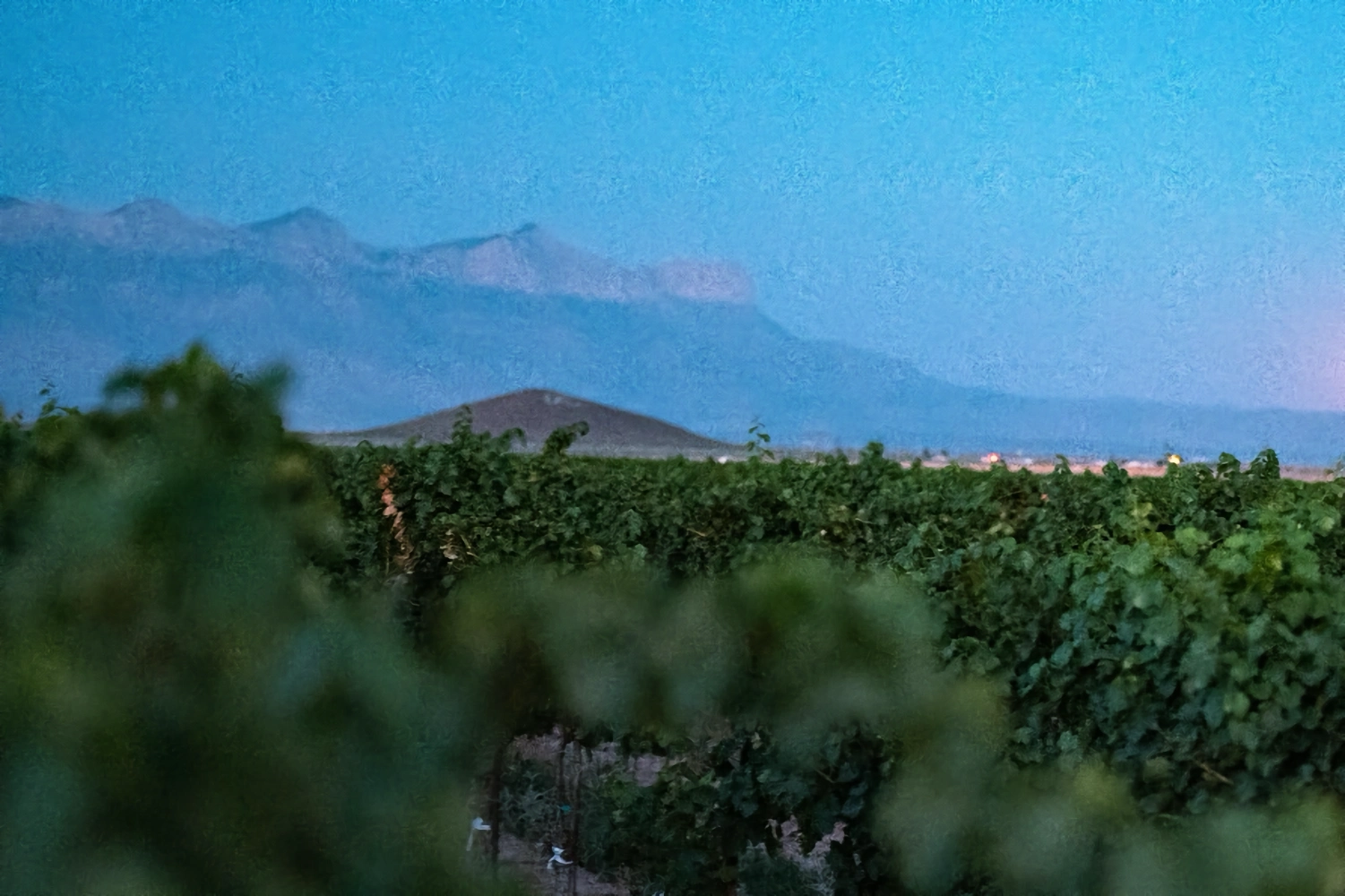
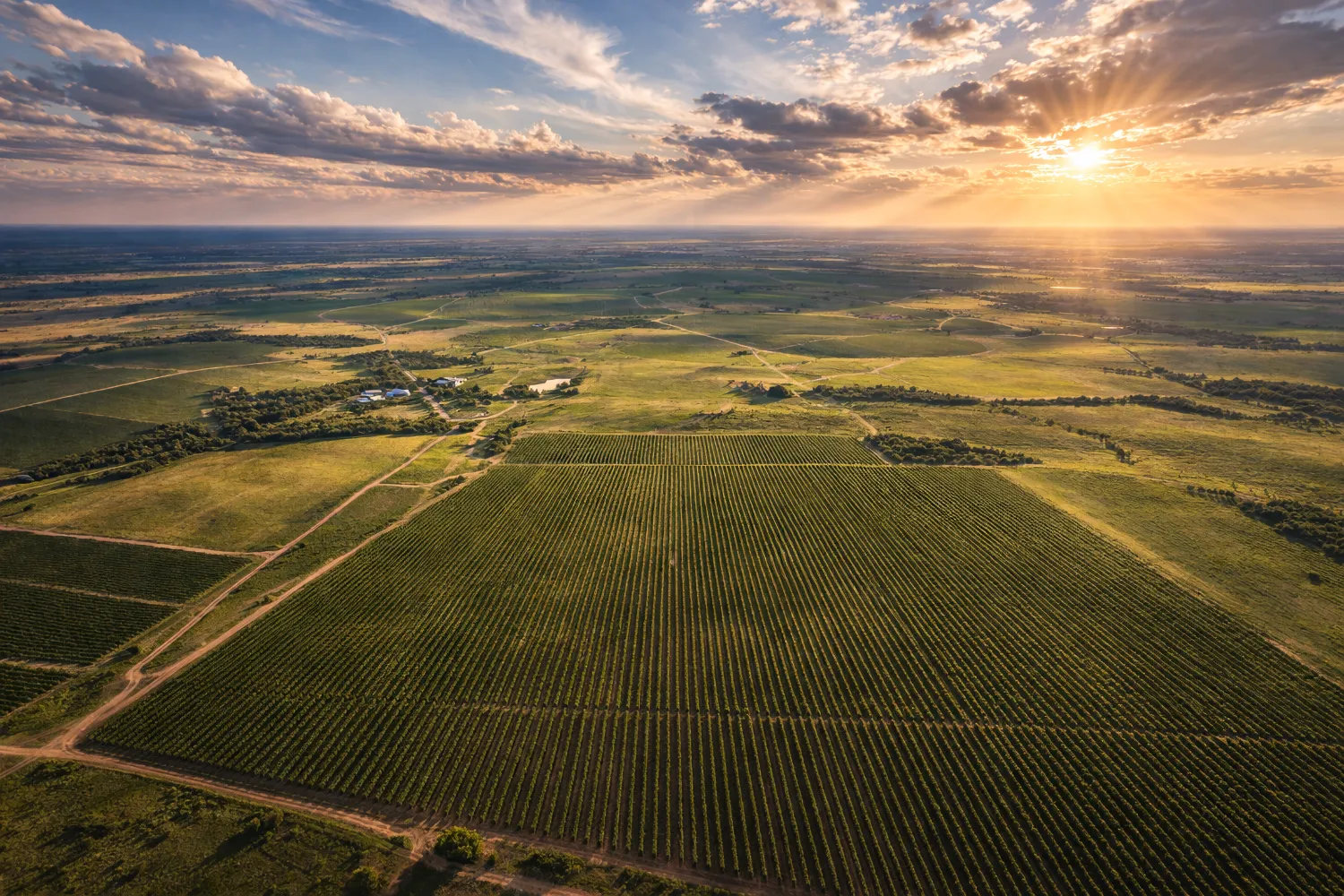
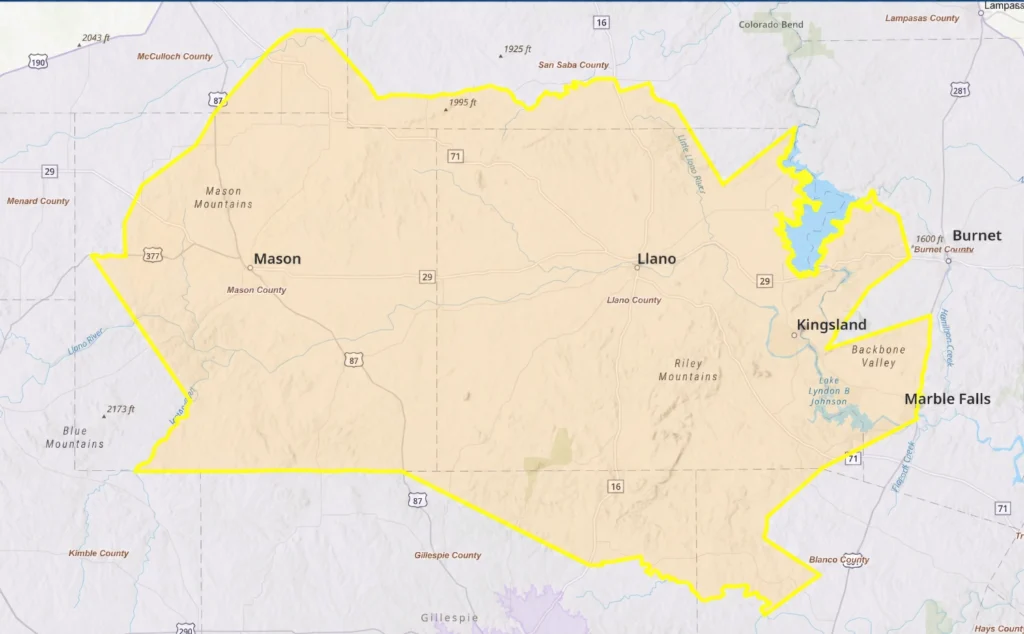
The proposed Llano Uplift American Viticultural Area stretches across 2,096 square miles – more than 1.3 million acres of the Texas Hill Country.
For perspective, that is more than twice the size of the Paso Robles AVA and roughly five times the geographic footprint of Napa Valley.
And scale is only part of what makes this place remarkable.
The rock beneath it is unimaginably old.
Older Than Dirt
“Older than dirt” is usually just hyperbole.
Here, it comes surprisingly close to a geological description.
The Precambrian crystalline rocks exposed through the Llano Uplift span roughly 1.1 to 1.4 billion years. Some components of the Valley Spring Gneiss have protolith ages approaching 1.37 billion years, while granitic intrusions such as the Town Mountain Granite arrived later, around 1.1 billion years ago.
Put that beside several famous wine regions built on much younger granitic rock and the scale of time becomes easier to grasp.
How Old Is the Llano Uplift?
Approximate age of crystalline and granitic rocks in selected wine regions
| Region / geology | Approximate age |
|---|---|
| Llano Uplift — Texas Hill Country, Precambrian crystalline rocks | ~1.1–1.4 billion years |
| Stellenbosch & Swartland — South Africa, Cape Granite Suite | ~515–550 million years |
| Northern Rhône Valley — France, granitic rocks | ~300 million years |
| Beaujolais — France, granite varies by site | ~320–350 million years |
Some components of the Valley Spring Gneiss have protolith ages approaching 1.37 billion years; granitic intrusions such as the Town Mountain Granite arrived later, around 1.1 billion years ago.
The comparison is deliberately broad: these are different geological histories, not one-to-one equivalents. The purpose is simply to help us understand how ancient the foundation of the Llano Uplift really is.
Over immense spans of time, crystalline rock fractures, decomposes and erodes. Feldspars and other minerals weather. Rock becomes gravel, sand and eventually soil.
In some parts of the Uplift, those ancient rocks weather directly into vineyard soils. Elsewhere, younger sedimentary layers sit above them.
And that is where the geological story begins to shape the wine story.
From Stone to Soil
Much of the Texas Hill Country is identified with limestone – alkaline, calcium-rich soils derived from a very different geological foundation.
In the Llano Uplift, the common story begins with an ancient crystalline foundation, but it does not end with a single surface geology or a single soil.
The Llano Uplift petition describes many sandy-to-loamy, well-drained soils derived from weathered granite and gneiss. It also identifies important soils derived from sandstone, schist and limestone. The proposed AVA therefore cannot be reduced to decomposed granite, even though ancient granite remains one of its defining geological signatures.
The broader Llano Uplift soils are generally slightly acidic and relatively high in potassium, with good nutrient availability. That differs from much of the surrounding limestone country, where alkaline, calcium-rich soils create a different set of conditions for vine nutrition and rootstock selection.
The Llano Uplift shares an ancient crystalline foundation, but the path from that foundation to the modern vineyard differs from place to place.
The vine encounters the modern growing environment, not geological age directly. In some places, ancient crystalline rock weathers directly into vineyard soils; elsewhere, younger sedimentary layers intervene. The resulting soils influence drainage, rooting, access to water and nutrients, and ultimately the way the vine grows and ripens.
Drainage is one of the recurring practical consequences. Freely draining soils can help growers control water availability and avoid waterlogged roots or excessive vegetative growth.
The same drainage can become a challenge when water is scarce. The important point is not that one soil condition is universally superior, but that the ground beneath the vine changes how growers have to farm it.
Perissos Vineyard offers a particularly tangible example of the more direct granitic expression.
Before planting commercially, Seth and Laura Martin experimented with grapes on different soil types. Their experience eventually led them to search specifically for decomposed-granite ground, bringing them to Hoover Valley and the site that became Perissos.
Dalton Humphreys, Managing Partner of Perissos Vineyard and Winery, described to me just how freely draining that soil can be. After a downpour, he said, the decomposed-granite gravel can be essentially dry again within a couple of hours.
One vineyard, however, can tell us only so much about a region of this scale.
From Hickory Sands to the Highland Lakes
Modern vineyard development across this vast landscape reaches back half a century.
Ed and Susan Auler began planting Fall Creek Vineyards at Tow in 1975. The following year Bob and Evelyn Oberhelman planted at Bell Mountain, north of Fredericksburg. That early Bell Mountain vineyard area was later recognized as its own American Viticultural Area, which lies entirely within the proposed Llano Uplift.
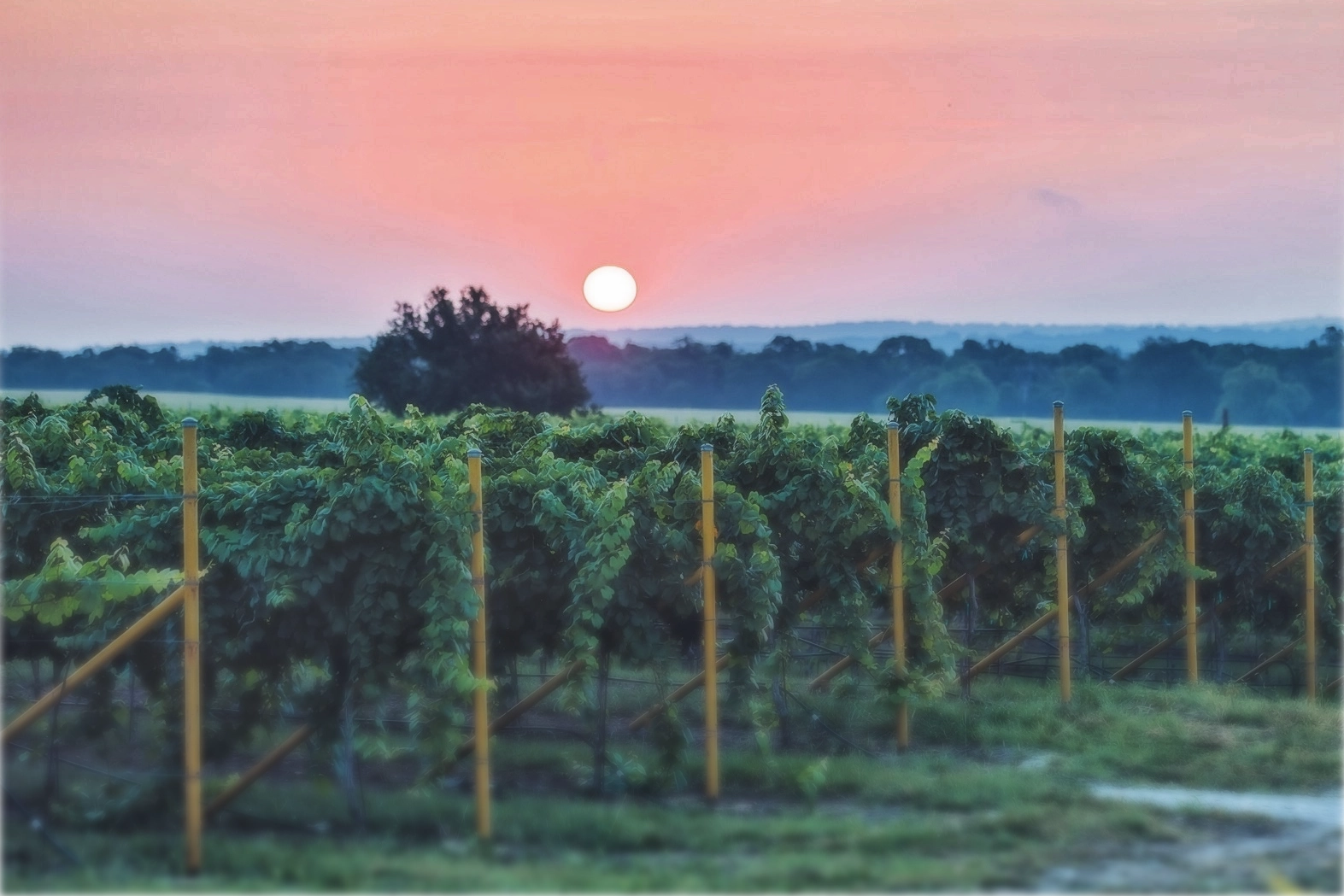
Today, highly regarded wines are emerging from one end of the Uplift to the other – from Hickory Sands in the west to Hoover Valley near the Highland Lakes in the east.
In his first major Texas report, Jim Gordon, executive editor at JamesSuckling.com, identified a handful of standouts. Among them were Robert Clay Vineyard and Uplift Vineyard.
That pairing is revealing.
Robert Clay sits in the western part of the proposed Llano Uplift, within the proposed Hickory Sands District near Mason. Uplift Vineyard lies far to the east in Hoover Valley near the Highland Lakes.
They share an ancient geological inheritance. Their growing environments are anything but identical.
Hickory Sands adds another chapter to that geological story. Younger Cambrian sediments were deposited across the ancient Precambrian foundation and eventually became the Hickory Sandstone that defines the district today. Its coarse, sometimes gravelly, low-fertility sands reflect that layered history rather than granite weathered directly in place.
The district also sits higher. Elevations range from 1,500 to 1,980 feet, with commercial vineyards averaging about 1,717 feet. Combined with the Hickory Aquifer and greater nighttime cooling, those conditions create a more tightly defined environment within the larger Uplift.
If both AVAs are approved, Hickory Sands would sit entirely within the Llano Uplift – a distinct place within a larger geological whole.
Around the Highland Lakes, elevation is lower, and vineyard conditions are shaped by local slope, water availability, wind and the nearby lakes.
Across the Llano Uplift, an ancient crystalline foundation provides a shared beginning. From there, surface geology, soils, water and other site conditions become increasingly specific.
The ancient foundation is the common beginning. From there, the differences become increasingly local.
Those differences can occur across dozens of miles – or within a single vineyard.
At Uplift Vineyard, winemaker Claire Richardson described blocks that look nearly flat until the vines reveal otherwise. Small changes in slope alter water movement enough that upper and lower portions of a block now receive different irrigation treatment. In some years, halves planted to the same variety have been harvested as much as a month apart.
In Hoover Valley, those differences become visible over remarkably short distances.
A Stone's Throw
Perissos and Uplift Vineyard are neighboring sites. Both occupy the same broad pocket of the Llano Uplift. Both work with decomposed-granite soils. Both experience many of the same regional conditions.
And yet they have learned different things from their vineyards.
Perissos originally trialed 13 grape varieties to learn what the site wanted to grow. Montepulciano and Dolcetto did not ultimately distinguish themselves there. Aglianico did, becoming one of the estate’s defining reds.
At Uplift Vineyard, Richardson gives a very different answer when asked which variety consistently performs best.
“Honestly, the Montepulciano does the best.”
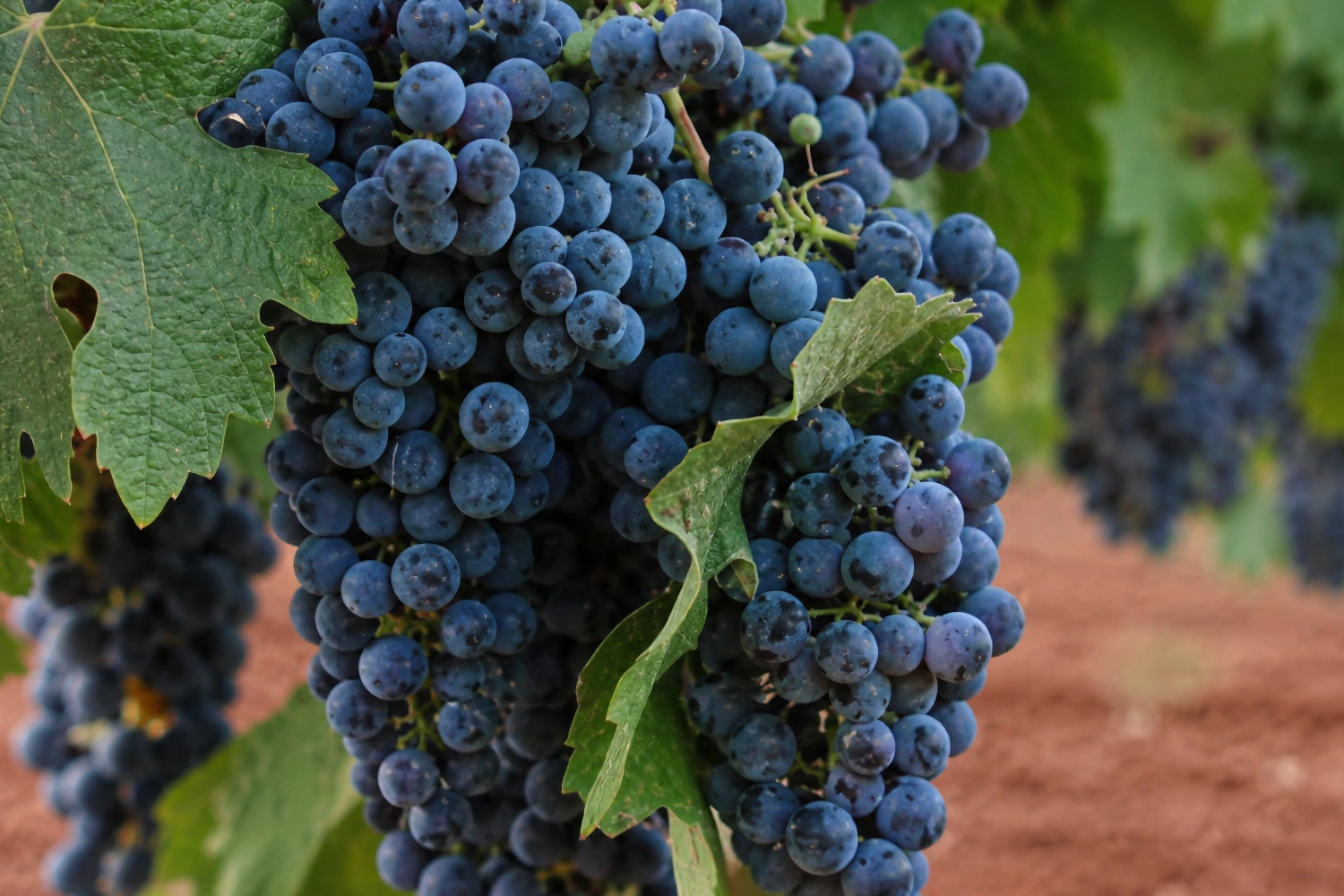
Uplift grows 13 varieties, but Richardson describes Montepulciano as the vineyard’s most consistently successful. Its relatively large berries develop thick, leathery skins that allow the fruit to hang late, allowing her to push ripeness well into the season.
That confidence comes from accumulated experience.
When I asked Richardson what she understands today that she did not when she first began working with Uplift Vineyard, her answer was simple: “Everything.”
Years of watching the same slopes, water movement, shifts in temperature, fruit development and vintage patterns have changed the way she makes decisions. Knowing how long Montepulciano can hang, recognizing when dehydration is becoming a problem, understanding how one part of a block behaves differently from another – site knowledge builds one season at a time.
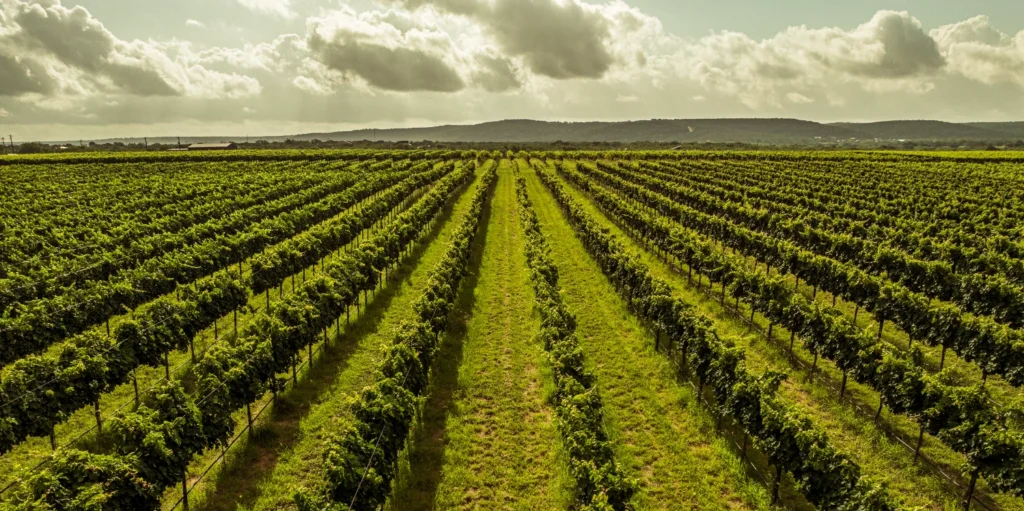
Move to Torr Na Lochs above the Highland Lakes and the landscape changes again.
There, vines occupy pockets of decomposed granite, sand and rock among exposed granite outcrops rather than one continuous expanse of vineyard ground. Blake DeBerry describes the site as difficult to prepare, with every square foot of plantable ground “hard fought.”
Elevation, wind and the lakes all become part of the equation. During the late freeze of March 2026, DeBerry observed far less severe freezing at Torr Na Lochs than at lower sites nearby. He attributes that partly to cold-air drainage and believes the exposed granite may also help by absorbing heat during the day and releasing some of that stored heat as temperatures fall.
Then there is the Malbec.
During the first pump-over after harvest, DeBerry says Torr Na Lochs Malbec can fill the winery with the smell of cherry pie filling cooking. That dark-cherry character carries into the finished wine. Nearby Perissos also grows Malbec, but DeBerry’s point is straightforward: the wines do not taste the same.
The common geological inheritance establishes the family.
The vineyard conditions define the individual.
Wine from the Rock
The Llano Uplift would be little more than an interesting geological story if the wines themselves were not delivering.
They are.
By my count of the first two rounds of Texas ratings from Gordon and Brian Friedman, 26 wines whose fruit I traced to vineyards within the proposed Llano Uplift – including the proposed Hickory Sands District – have scored at least 93 points. Eleven have reached 94 points or above.
The significance is not simply the numbers. It is the breadth behind them.
Those wines span different parts of the Uplift and a remarkable range of grapes and blends. Highly rated Cabernet Sauvignon, Merlot, Mourvèdre, Montepulciano, Tempranillo and other varieties have emerged from the region. Its strongest results are not dependent on one grape, one vineyard or one style of wine.
Other recognition reinforces the point.
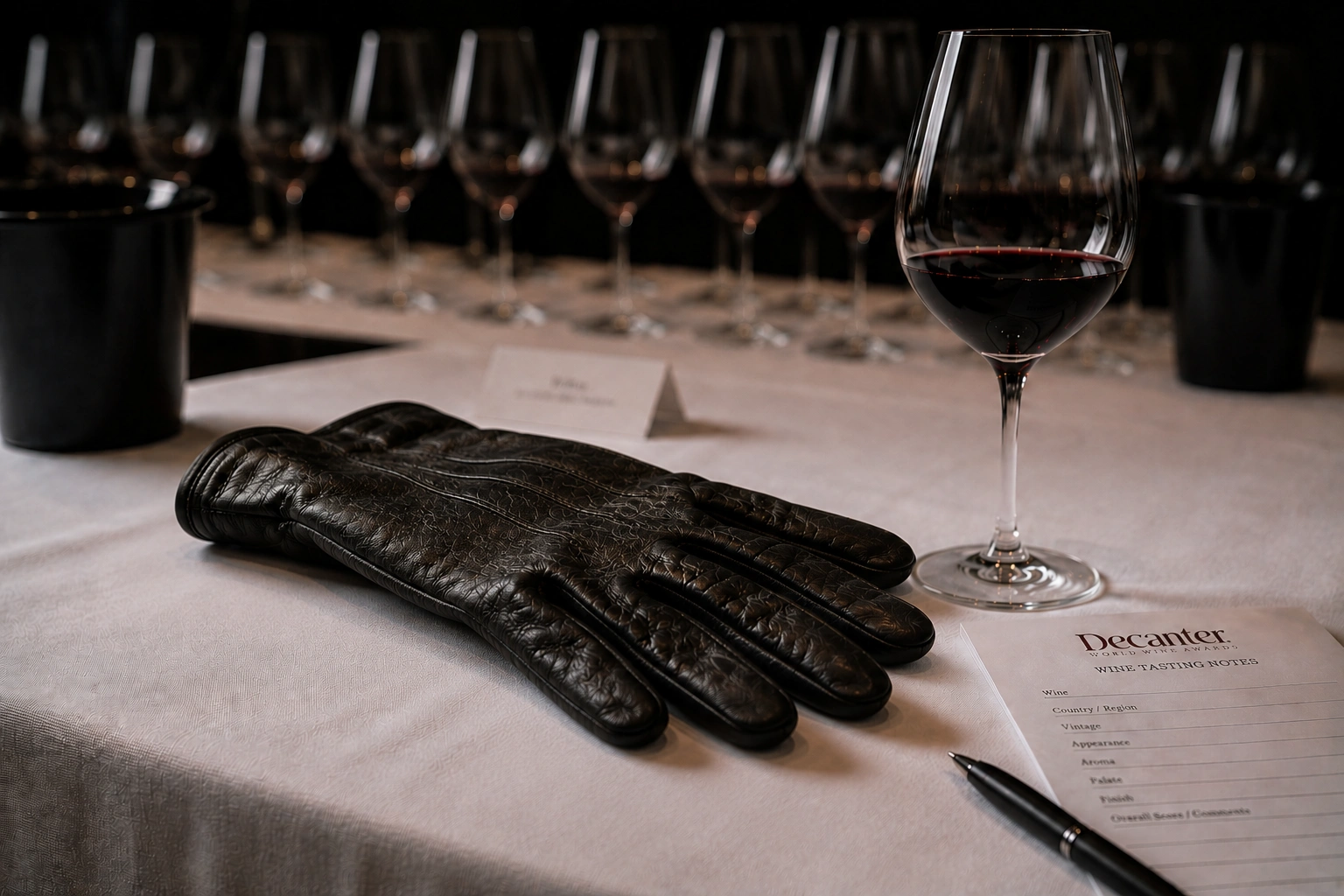
Perissos’ 2022 estate Aglianico earned Gold at the 2025 San Francisco Chronicle Wine Competition, and the 2023 vintage repeated the result in 2026. Uplift Vineyard wines, La Valentía’s Uplift Vineyard Grenache and Lost Draw’s Uplift Cuvée have all scored 91 points or better at the Decanter World Wine Awards.
No single critic or competition establishes the quality of a wine region. Repeated recognition from different directions becomes harder to ignore.
Before the Cork Is Pulled
So what might we expect from a Llano Uplift wine?
Not one grape. And certainly not one flavor.
When professional tasting notes from opposite ends of the proposed region are read together, some recurring characteristics begin to appear.
Red and cherry fruit are common. So are savory and herbal notes. Mineral or saline character appears on both sides.
The overlap is not complete.
Freshness, energy and floral lift appear more consistently in the eastern vineyards around Hoover Valley. Hickory Sands often presents a broader, more savory and sometimes more powerful expression.
Not one grape. And certainly not one flavor. But across professional tasting notes, some recurring characteristics begin to appear.
Freshness · energy · floral lift
Broader · more savory · sometimes more powerful
These are recurring tendencies, not a fixed regional tasting note.
A regional identity does not require every vineyard to produce the same wine. The question is whether certain characteristics recur while individual places remain distinct.
The evidence does not prove that geology causes those characteristics, nor does it establish that they are unique to the Llano Uplift. But it moves the observation beyond a single vineyard.
Freshness is especially interesting in a warm climate.
Ripening comes early in the Texas Hill Country, where harvest often begins in July. In 2024, William Chris Wine Company received Llano Uplift Viognier on July 2 – its earliest Hill Country start – and completed its Hill Country picks around mid-August.
Warm conditions can accelerate ripening and compress the season. Picking decisions are an important part of preserving freshness while allowing the fruit to ripen fully.
Claire Richardson approached the question of what to expect from an Uplift Vineyard wine from another direction — not by compiling tasting notes, but by making the wines.
When I asked what she might recognize if tasting one blind, she came back to two things.
The first was the combination of fruit and savory character. The wines, she said, are “equally fruity as they are herbal.”
The second was floral lift.
Even in the reds.
That floral quality became particularly clear to her in the hot, dry 2022 vintage. Earlier picking produced somewhat leaner, more delicate wines, allowing the flowers to emerge more clearly from behind the fruit.
Once she noticed it, she began finding it in other vintages as well.
Parts of that pattern persist beyond the Uplift cellar. Jim Gordon described Ab Astris’ 2023 Roussanne from Uplift Vineyard with flowers, honeysuckle, tangy acidity, great freshness, balance and subtle minerality. Other wines made from Uplift fruit repeat pieces of the same vocabulary.
Perissos adds another point of comparison. Gordon’s notes on its Viognier and Picpoul Blanc emphasize floral lift, energy, clarity and mineral character – overlapping the broader pattern while remaining expressions of a different vineyard.
That local pattern has an intriguing echo elsewhere. Wines from established granitic regions are often described with some of the same qualities: freshness and tension, aromatic lift, and savory or mineral character.
The resemblance is suggestive, not causal.
What emerges in the Llano Uplift is more a family resemblance than a single, defined tasting note: recurring red fruit, savory complexity and mineral or saline character, with freshness and aromatic lift especially prominent in the eastern part of the Uplift.
For a region of this scale, that may be the more meaningful expectation.
Written in Stone
A place name creates an expectation before a bottle is opened.
That expectation does not have to be a single grape or a single flavor to be meaningful.
Napa Valley offers a familiar comparison. No one expects Howell Mountain, Rutherford and Los Carneros to produce interchangeable wines. Their elevations, soils and growing conditions differ dramatically.
Those differences do not diminish Napa Valley.
They give the places within it greater meaning.
The Llano Uplift asks for the same kind of understanding on an even larger scale.
What its vineyards share is an extraordinary common beginning: an ancient crystalline foundation of granite and metamorphic rock, exposed directly in some places and overlain by younger sedimentary rocks in others.
From there, the geography becomes more specific.
Hickory Sands adds a younger Cambrian sedimentary layer, higher elevation, coarse sandy soils, groundwater from the Hickory Aquifer and greater nighttime cooling. Hoover Valley brings a more direct expression of weathered granite, along with its own water constraints, wind and the nearby lakes. Within each, individual vineyards become more specific still.
That gives the Llano Uplift layers of meaning.
Enchanted Rock makes visible a geological world that usually lies beneath our feet. An AVA can do something similar. It gives a name to the common foundation while allowing the places within it to become increasingly distinct.
Written in stone does not mean predetermined.
The stone establishes the beginning of the story. The vineyard writes the rest.