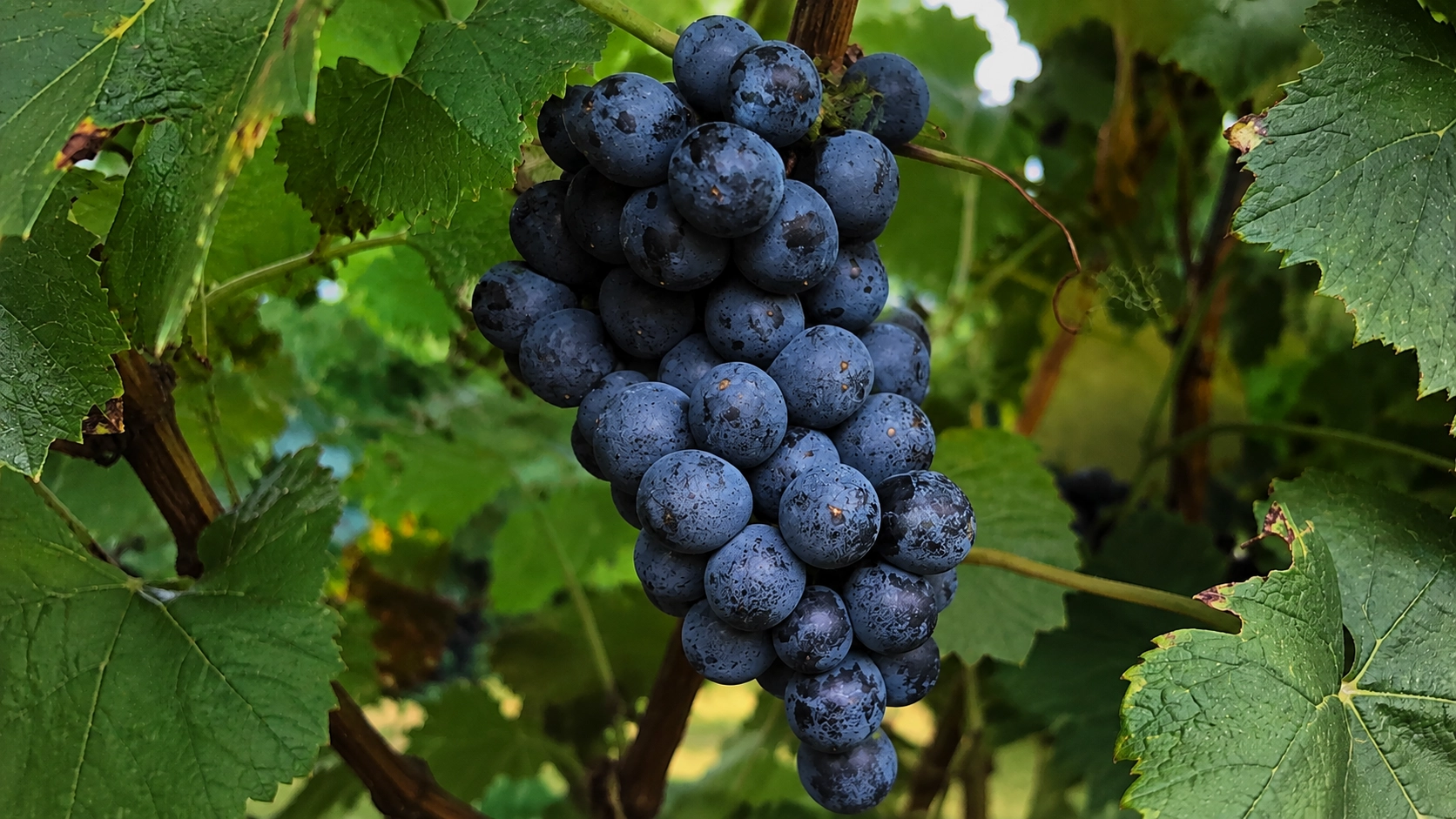
Bite into most red wine grapes and you may be surprised by what you find. Beneath a dark purple or nearly black skin, the flesh is generally pale. Much of the color in red wine comes from pigments extracted from those skins during fermentation.
A small group of grapes is different. Known as teinturier varieties, they contain red pigment not only in their skins but also in the flesh itself. Alicante Bouschet is perhaps the best-known example.
Then there is Souzão.
Few grapes produce color as dramatically. Its wines can be extraordinarily dark, and the pigment in its skins is released with remarkable ease. The grape is often described as a teinturier by growers, winemakers and wine references.
But is it?
The closer you look, the less simple the answer becomes.
This turned out to be the rabbit hole of rabbit holes.
I began by trying to answer what seemed like a fairly straightforward question about a grape. Before long, I was working my way through Portuguese cultivar records, genetic studies, historical grape-reference works and something called OIV descriptor 231—of which I knew absolutely nothing before beginning this exercise and, if you ask me about it two weeks from now, I’m reasonably certain I’ll have to look it up again.
But the deeper I went, the harder it became to accept the easy answer.
Authoritative sources disagree about whether Souzão’s flesh is intrinsically pigmented. Some describe red or slightly colored pulp. Others explicitly say that it is not a teinturier and attribute its extraordinary color primarily to intensely pigmented skins.
Even the scientific measurement that could help resolve the question has proved elusive: I could find no published, accession-specific OIV 231 measurement of flesh pigmentation for authenticated Souzão material.
The best answer, then, is not simply yes or no.
Souzão’s status as a teinturier grape is disputed.
What Makes a Grape a Teinturier?
The word teinturier comes from the French for dyeing or staining.
In most red Vitis vinifera grapes, anthocyanins—the pigments responsible for red, purple and blue color—are concentrated primarily in the skin. Crush a Cabernet Sauvignon or Tempranillo berry and the pulp itself is generally pale.
For purposes of this discussion, I’m using teinturier in the strict anatomical sense: a grape in which anthocyanin pigment occurs in the flesh as well as the skin.
That distinction is important. An intensely dark wine does not prove that the grape producing it is a teinturier. Neither does dark juice after a berry has been crushed. A grape with exceptionally pigmented skins can release so much color so quickly that the juice becomes red almost immediately.
Scientific literature describing recognized teinturier varieties defines the category by this presence of anthocyanins in the pulp as well as the skin. The International Organisation of Vine and Wine provides a specific descriptor for it: OIV 231, “Berry: intensity of flesh anthocyanin coloration.”
In other words, there is a difference between asking how much color a grape produces and asking where that color resides before the berry is broken.
With Souzão, that distinction becomes everything.
It’s Something You Can’t Possibly Miss
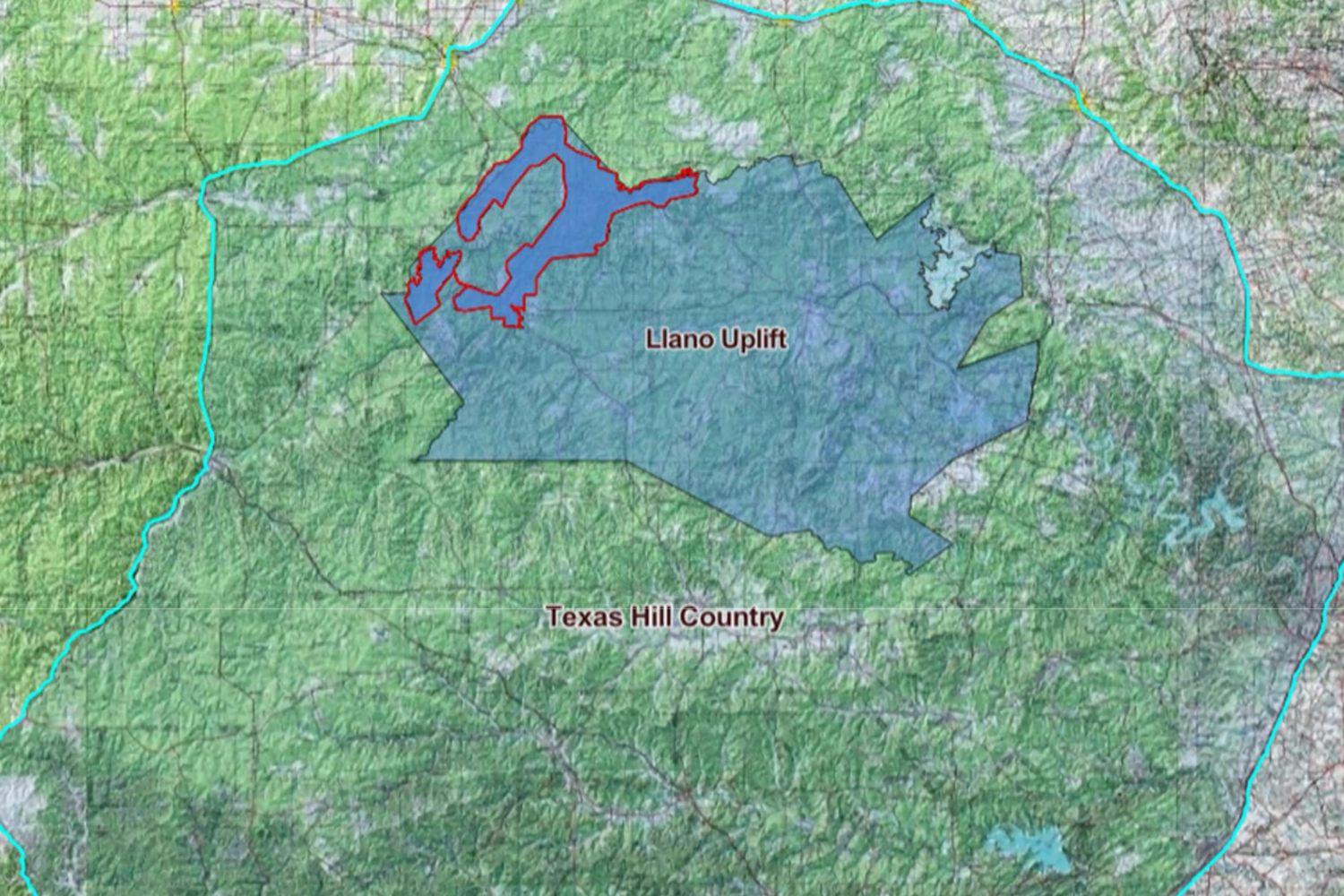
I understood the source of the confusion more clearly while standing in a Texas Hill Country vineyard.
At Texas Heritage Vineyard near Fredericksburg, winemaker Tyler Buddemeyer encouraged me to taste a ripe Souzão berry from the vine.
I bit into it and pulled it away.
The exposed juice appeared extraordinarily dark—nearly black.
It was unlike the experience of biting into most red wine grapes, and it makes the description of Souzão as a teinturier seem self-evident.
Except it isn’t.
The moment the skin is ruptured, an uncontrolled experiment has begun. Pigment from an intensely colored skin can immediately enter the juice and stain the pulp. Looking at a bitten, cut or crushed berry cannot establish whether the pigment was already present within the intact flesh.
My observation tells us something very real about Souzão:
The grape gives up extraordinary color with remarkably little effort.
It does not tell us precisely where that color originated.
Where Does the Color Come From?
That distinction helps explain why descriptions of Souzão can sound contradictory even when the people making them may be observing much the same thing.
Wines of Portugal describes Vinhão—the name commonly used for the grape in northern Portugal—as having slightly colored pulp, while also saying it is “not entirely a teinturier.”
Wine writer Jamie Goode has taken the opposite position more forcefully. Based on his own firsthand observation, he has written that Sousão is not a teinturier at all, but instead has highly pigmented skins that release their color easily.
A historical grape reference collected by Vine to Wine Circle goes in the other direction. It describes Vinhão as having red-colored flesh and even calls it the only Portuguese grapevine variety with red flesh. Intriguingly, the same source cites an observation attributed to Cincinnato in 1900 that berries with colorless flesh could occur on the same bunch.
Those are not small differences.
One source allows for lightly pigmented flesh but stops short of calling the variety fully teinturier. Another rejects the classification. A third describes genuinely red flesh while simultaneously acknowledging apparent variability.
All of them are discussing a grape famous for producing exceptional color.
The disagreement is over why.
What the Authorities Actually Tell Us
Putting the principal claims beside one another makes the uncertainty easier to see.
| Source | Description | What It Supports | What It Does Not Establish |
|---|---|---|---|
| Wines of Portugal | Slightly colored pulp; “not entirely” a teinturier. | Some degree of pulp coloration may occur. | How much pigment is intrinsic to isolated flesh. |
| Vine to Wine Circle | Red-colored flesh; historical report of colorless-fleshed berries on the same bunch. | Historical basis for calling Vinhão red-fleshed. | Controlled anatomical proof or authenticated accession-level measurement. |
| Jamie Goode / Wineanorak | Not a teinturier; unusually pigmented skins release color readily. | A clearly stated firsthand observational counterargument and a skin-driven explanation. | Controlled isolation or chemical analysis of the pulp. |
| Costa et al. (2014) | Separately analyzed Sousão skin, pulp and seed fractions; detailed individual anthocyanin profiling was performed on skin extracts. | Direct tissue-separated research involving Sousão. | Anthocyanins in isolated pulp; OIV 231 score; teinturier classification. |
| UC Davis Foundation Plant Services | Institutional records connecting Souzão, Sousão and Vinhão nomenclature; morphological descriptions include colored flesh. | Important germplasm and varietal information. | An OIV 231 measurement establishing degree of flesh pigmentation. |
| OIV | Descriptor 231 measures intensity of anthocyanin coloration in grape flesh. | Provides the standardized measurement needed to address the question. | Does not itself provide a Souzão measurement. |
The distinction in that final row matters most.
We know how flesh pigmentation can be formally described.
What we do not appear to have is the measurement for this grape.
The Test That Could Help Answer the Question
At this point, I thought I had finally found the way out of the rabbit hole.
There was an international descriptor created specifically to measure the thing I was trying to understand.
OIV descriptor 231 records the intensity of anthocyanin coloration in grape flesh.
Perfect.
The problem was finding a published Souzão measurement.
OIV 231 is much more useful for this question than wine color, skin color, total berry anthocyanins or the appearance of juice after crushing.
A rigorous answer would ideally begin with authenticated plant material and examine the flesh in a way that prevents pigment from the skin from contaminating the observation. A standardized OIV 231 score would be particularly valuable. Even stronger evidence could include microscopic examination or anthocyanin analysis of isolated pulp tissue.
In researching Souzão, I found the OIV descriptor itself and scientific studies establishing what distinguishes teinturier grapes. I also found peer-reviewed work involving Portuguese grape varieties, including Sousão, and institutional and historical descriptions of Vinhão.
I did find published research that separately examined Sousão skin, pulp and seeds. Costa et al. (2014), for example, measured phenolic composition and antioxidant activity in the different berry fractions, while its detailed individual anthocyanin analysis was performed on the skins.
That is useful because it tells us that Sousão pulp has, in fact, been examined separately from the skin.
But it still does not tell us the thing we need to know here: whether anthocyanins themselves are present in the isolated pulp.
What I did not find was a published OIV 231 score for an authenticated Souzão/Sousão/Vinhão accession that definitively answers the question, or an isolated-pulp anthocyanin analysis that settles whether the flesh itself contains the pigments that define a teinturier in the anatomical sense being used here.
That absence should not be interpreted as proof that Souzão is not a teinturier.
It means something narrower but important:
The categorical answer frequently given to the question appears stronger than the publicly available evidence supporting it.
To settle the matter more convincingly would require authenticated plant material, controlled isolation of the flesh from the skin, standardized measurement and ideally replication across multiple selections and stages of ripeness.
The Name Is Part of the Story
Just when I thought the flesh-color question was complicated enough, the name of the grape became its own rabbit hole.
I already knew that grape varieties in Portugal and Spain often go by different names from one region to another. That is hardly unusual in Iberian wine.
What I hadn’t imagined was anything quite like this—or that the names themselves might complicate the very question I was trying to answer.
In Texas it is generally called Souzão. In Portugal, Sousão and Vinhão are commonly encountered. In Spain, particularly Galicia, Sousón appears.
Then come names such as Sezão, Sousão de Correr, Sousão Forte, Sousão de Comer and Sousão Vermelho.
It would be convenient simply to put all of them in a list labeled “synonyms.”
The history is not quite that tidy.
Modern germplasm records connect several of these names, but Portuguese grape nomenclature has also involved homonyms, historical renaming and plant material that has not always been identified consistently. That becomes especially important when older descriptions of flesh color are used to make claims about the grape growing today.
A nineteenth- or early twentieth-century writer describing a grape by a regional name was not working with DNA identification, authenticated repository accessions or modern clonal records.
That does not make the historical observation worthless.
It does mean we should be careful about assuming that every use of every related name describes genetically identical plant material.
For that reason, historical observations attached to Vinhão, Sousão, Souzão or Sousón should not automatically be treated as observations of the same genetically verified material now planted under the Souzão name in Texas.
That offers at least one plausible reason why the literature contains such different descriptions.
The name, it turns out, is not a side issue to the teinturier question.
It may be part of it.
What Is Growing in Texas?
That question becomes especially interesting in Texas because we can identify at least some of the plant material more precisely.
John Rivenburgh, who helped introduce Souzão to Texas, told me that the original vines were sourced through NovaVine in California. He has worked with two selections identified as FPS 1 and Portugal 2.2, grafted to 1103 Paulsen rootstock.
Most significantly, Rivenburgh says the Souzão planted at Rustic Spur Vineyards is Portugal 2.2. Fruit from that vineyard produced his 2020 Rivenburgh Wine Rustic Spur Vineyards Souzão, a wine awarded 96 points by critic Jonathan Cristaldi. That vineyard is part of the broader Hill Country Souzão story explored in Nobody Does It Better.
Foundation Plant Services at the University of California, Davis provides an unusually useful trail for the 02.2 selection. Its record traces the material to Portugal, where it was obtained by noted UC Davis grape breeder Dr. Harold Olmo from the Régua Agricultural Station in the Douro and brought to California in 1984. The source material was identified at the time as Souzão II.
That gives the Texas discussion something many general descriptions of the grape lack: identifiable plant material with documented provenance.
It still does not answer the teinturier question.
Knowing where a vine came from is not the same as knowing the anthocyanin content of its pulp. But if this question were ever investigated experimentally in Texas, documented material such as the Rustic Spur Portugal 2.2 selection would provide a far better starting point than an unidentified vine known only by a historical varietal name.
Why the Question Matters
Whether Souzão technically qualifies as a teinturier may sound like the kind of distinction that matters only to people who study grape varieties.
In one sense, it is.
No laboratory classification changes what growers and winemakers see.
Souzão produces extraordinary color with remarkably little effort in extraction. Its ability to contribute color is one reason the variety has historically been valuable in Portugal, particularly in blends where color, acidity and structure are prized.
But terminology matters when one explanation begins to replace another.
Calling Souzão a teinturier implies something anatomical: pigment exists within the flesh. Saying instead that its color comes overwhelmingly from intensely pigmented skins describes a different mechanism.
Those statements are testable.
And when reputable sources make both, the responsible answer is not to choose whichever one has been repeated most often.
It is to acknowledge what we know, what we observe and what remains unproven.
So, Is Souzão a Teinturier Grape?
The most defensible answer is that Souzão’s status as a teinturier grape is disputed.
There is substantial support for the observation behind the classification. Souzão is an exceptionally dark grape whose juice can take on color almost immediately. Some institutional and historical sources describe slightly colored or genuinely red flesh.
Other informed observers explicitly reject teinturier status and attribute the effect primarily to unusually pigmented skins.
And although published research has separately examined Sousão pulp, skin and seeds, I could not locate the accession-specific pulp-anthocyanin or standardized OIV evidence needed to settle the anatomical question confidently.
So the mystery remains.
I began this with what seemed like a simple question and ended up learning far more about grape anatomy, Portuguese nomenclature and international standards for describing grape varieties than I ever expected to know.
Somewhere along the way, I even learned what OIV 231 is.
At least for now.
And perhaps the most accurate thing we can say about one of the darkest grapes in the wine world is also the simplest:
Its color is unmistakable. Its classification is not.
Principal Sources
International Organisation of Vine and Wine / Bioversity International. GRAPEGEN06 descriptor list. OIV descriptor 231: Berry: intensity of flesh anthocyanin coloration.
Wines of Portugal. “Vinhão.” Institutional Portuguese grape-variety profile.
UC Davis Foundation Plant Services. Souzão/Vinhão grape-variety and plant-material records.
Vine to Wine Circle. “Vinhão.” Historical grape-variety profile, including the claim attributed to Cincinnato (1900).
Jamie Goode, Wineanorak. “Sousao is not a teinturier variety.”
Costa et al. (2014). “Anthocyanin profile and antioxidant activity from 24 grape varieties from the Douro and Dão regions.” OENO One.
Zhang et al. (2023). “The haplotype-resolved T2T genome of teinturier cultivar Yan73 reveals the genetic basis of anthocyanin biosynthesis in grapes.” Horticulture Research.
Li et al. (2024). “Artificial shading of teinturier grape Kolor clusters reveals light-responsive biomarkers: focus on flavonoid profiles and metabolism.” Frontiers in Plant Science.